India’s growth story today is closely tied to infrastructure, electrification, and clean energy, and at the center of all of this lies copper. As demand rises across industries, the role of copper recycling is becoming increasingly critical in building a more efficient, resilient, and sustainable metal ecosystem.
Across the country, every copper recycling plant is no longer just processing scrap. It is helping reshape how India sources, utilises, and reuses one of its most important industrial metals.
The Shift Towards a More Efficient Metal Economy
The need for metal recycling has never been more urgent. Traditional metal production is energy-intensive and contributes significantly to emissions. In contrast, recycling offers a far more efficient pathway.
Copper, in particular, stands out:
- Recycled copper retains up to 95% of the value of primary metal
- Copper recycling uses up to 85% less energy than mining
- It reduces carbon emissions by nearly 65%
These advantages are driving a fundamental shift, where recycling is not just an alternative, but a preferred source of raw material.
The Rise of Secondary Copper in India
India’s secondary copper market has seen strong momentum in recent years. The share of recycled copper has increased from 24% in FY19 to ~38–39% in FY24, and is projected to reach ~55% by 2030.
In absolute terms, demand for recycled copper has grown from 278 kT to over 645 kT, reflecting a rapid shift towards sustainable sourcing.
This growth is being driven by:
- Expansion in infrastructure and construction
- Electrification and energy transition
- Rising demand from automotive and EV sectors
- Increased use of copper in consumer durables
As demand accelerates, copper recycling companies in India are playing a critical role in ensuring supply stability.
How Copper Recycling Plants Power Efficiency
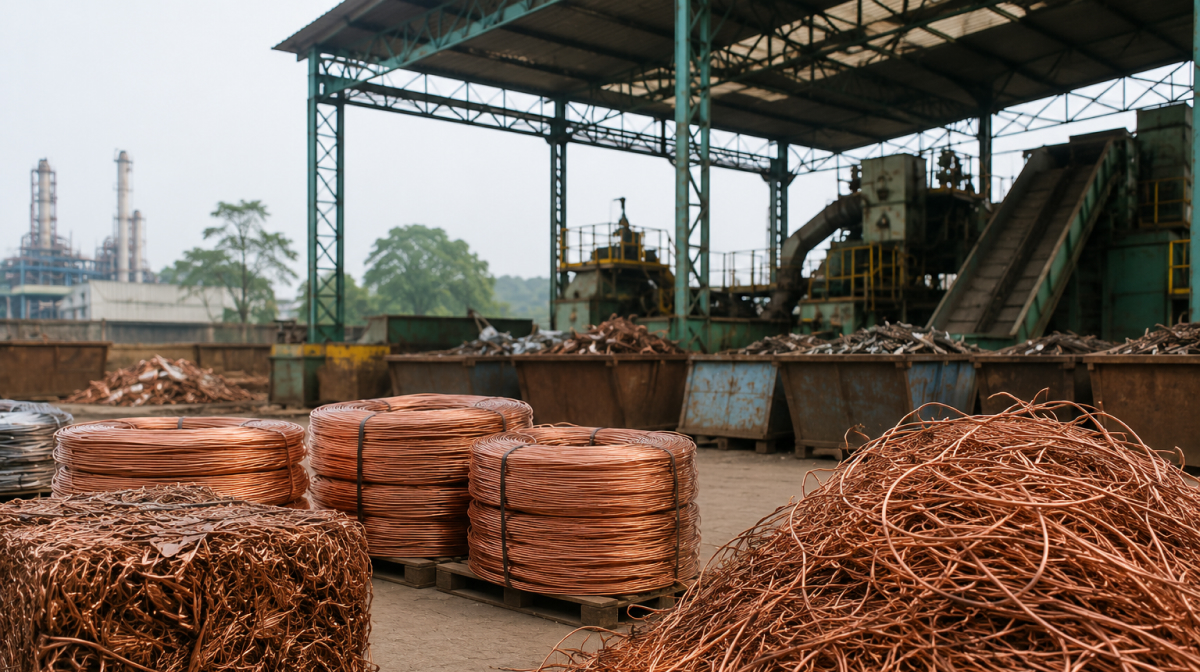
A modern copper recycling plant operates as a high-efficiency system that transforms scrap into high-quality metal through a structured copper recycling process.
1. Collection and Segregation
Scrap is sourced from industrial waste, electrical systems, e-waste, and construction debris. It is then classified based on quality and copper content, ensuring optimal processing.
2. Shredding and Granulation
The material is broken down into smaller pieces to separate copper from insulation, plastics, and other non-metallic components. Advanced plants use automated systems to improve precision.
3. Melting and Refining
The processed scrap is melted and purified using techniques such as fire refining or electrolysis. This stage ensures that impurities are removed and purity levels meet industrial standards.
4. Casting and Output
Refined copper is cast into rods, billets, or ingots, which are then supplied to manufacturers for use across industries.
What makes this copper recycling process powerful is its ability to produce metal that is virtually indistinguishable from virgin copper, while using significantly fewer resources.
Feeding India’s Fast-Growing Industries
The output from every copper recycling plant directly supports key sectors:
- Automotive & EVs: Copper is essential for motors, batteries, and wiring systems
- Infrastructure: Used in construction, electrical networks, and plumbing
- Energy & Renewables: Critical for solar panels, wind turbines, and grid systems
- Consumer Electronics: Powering devices, appliances, and communication systems
In FY23 alone, the transportation sector saw a 34% growth in copper demand, highlighting how deeply copper is embedded in India’s growth trajectory.
Strengthening the Recycling Ecosystem
India’s copper recycling ecosystem is unique in its structure. It combines:
- A strong informal sector for collection and initial segregation
- Organised copper recycling companies in India with advanced processing capabilities
- Growing integration with manufacturing through closed-loop systems
This ecosystem ensures high recovery rates with minimal material loss, making India one of the more efficient markets for copper recycling. For Jain Resource Recycling, the emphasis lies in building a system where copper moves efficiently from scrap to high-quality output. By integrating sourcing networks with advanced processing capabilities, the aim is to reduce material loss and enhance consistency across applications. Guided by Kamlesh Jain, this model supports a more streamlined and dependable metal supply ecosystem.