Have you ever considered that the copper lying in old wires, motors, or discarded electronics could power India’s push towards a greener economy? Copper scrap recovery is a strategic opportunity for manufacturers, recyclers, and the broader economy. With growing demand for copper across construction, transportation and clean energy technologies, recycling old copper is becoming as important as mining new sources.
Copper: The Backbone of Industrial and Clean-Energy Growth
Copper is indispensable across sectors like construction, transportation, energy, and electronics. Its applications extend to electrical wiring, plumbing, HVAC systems, electric vehicles, wind turbines, and solar panels. India’s overall copper demand has surged from 1,159 kilo tonnes (kT) in FY19 to 1,522 kT in FY23, and projections suggest it could exceed 2,500 kT by 2030. With such high demand, relying solely on primary copper sources is unsustainable, making copper scrap recovery a necessity.
Sources of Copper Scrap
Copper scrap in India comes from a wide range of sources:
- Waste-Printed Circuit Boards: Majorly from the ICT sector, with cities like Hyderabad, Bengaluru, Chennai, Delhi, and Gurugram accounting for ~25.9 kT of WPCBs annually.
- Insulated Copper Wires: India imports ~60 kT yearly, mainly from the Middle East, UK, and US, contributing 28–29 kT of recyclable copper.
- Construction and Demolition Waste: Including wiring, pipes, fittings, HVAC components, and brass from door handles and frames.
- Old Motors and End-of-Life Vehicles: Providing wiring, electric motors, and copper harnesses.
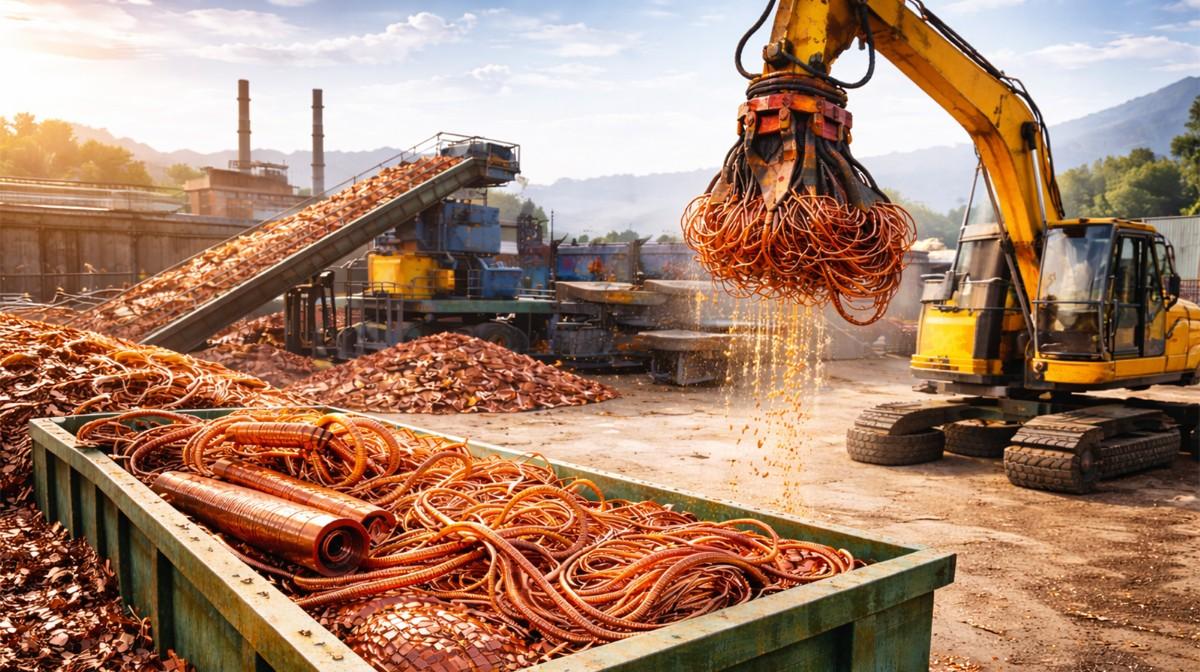
These diverse sources ensure a steady supply of copper scrap for recycling plants, enabling India to meet growing industrial demand while reducing environmental impact.
Challenges and Opportunities in Copper Recycling
While India achieves high collection efficiency for old copper, the direct remelting process can lead to variable purity, especially when processing mixed scrap. Refining high-grade scrap and smelting low-grade scrap are crucial steps for copper recycling companies in India to produce uniform, high-quality copper rods and billets.
With the secondary copper industry projected to account for 55% of total demand by 2030, there’s a pressing need for organised recycling practices. Scrap recycling companies that invest in advanced technologies and sustainable practices are poised to shape India’s circular economy.
Benefits of Copper Scrap Recovery
- Environmental Impact: Recycling copper reduces energy consumption by up to 85% compared to primary production and cuts CO2 emissions significantly.
- Economic Advantage: Utilizing scrap copper lowers raw material costs and ensures a steady supply for industries dependent on copper.
- Circular Economy Contribution: Recovered copper keeps resources in the production loop, promoting sustainable manufacturing practices.
The Role of Recycling Companies in India
India’s scrap recycling companies and copper recycling plants are pivotal in this ecosystem. By collecting, sorting, and processing copper waste, these companies ensure high recovery rates and quality outputs that feed into construction, automotive, consumer durables and industrial applications. A structured and organised approach by copper recycling companies in India strengthens the scrap business in India, offering both environmental and economic benefits.
As India pushes toward a circular economy and sustainable industrial growth, investing in copper scrap recovery has become a strategic imperative. From reducing dependency on mined copper to supporting renewable energy infrastructure, every kilogram of recycled copper counts.
Companies like Jain Resource Recycling Ltd, with their expertise in scrap handling and advanced recycling techniques, play a crucial role in transforming copper waste into high-quality, reusable metal, helping industries stay sustainable, competitive and aligned with India’s green growth ambitions.