India’s industrial growth is entering a new phase where sustainability is a core operating principle. Across sectors like infrastructure, automotive, electronics, and energy, there is a clear movement towards cleaner materials and responsible manufacturing.
At the center of this transition lies metal recycling – a process that is redefining how metals are produced, consumed, and reintroduced into the economy. Today, leading metal recycling companies in India and organised recycling companies in India are not just processing scrap; they are enabling a shift towards greener, more efficient production systems.
Why Green Metal Production Is Gaining Momentum
Traditional metal production, especially through mining and smelting, has a significant environmental footprint. It involves high energy consumption, emissions, and resource depletion.
In contrast, green metal production focuses on:
👉 Reducing reliance on virgin raw materials
👉 Lowering energy consumption through recycling
👉 Minimising emissions
👉 Integrating renewable energy into manufacturing
This shift is being accelerated by:
👉 Government policies promoting circular economy practices
👉 ESG commitments by global and domestic companies
👉 Rising demand from sectors like EVs, renewable energy, and electronics
As a result, metal recycling is becoming the foundation of sustainable industrial growth.
The Role of Recycling Infrastructure
A key enabler of this transition is the expansion of advanced recycling plants in India. These facilities are designed to handle complex waste streams, recover high-value metals, and produce materials that meet global standards.
Modern recycling plants are increasingly:
- technology-driven, with automated sorting and processing
- capable of handling multi-material recovery
- integrated with manufacturing supply chains
- focused on minimising waste and maximising output
This evolution is helping recycling companies in India move from basic scrap processing to high-quality, value-added production.
Copper at the Center of the Green Shift
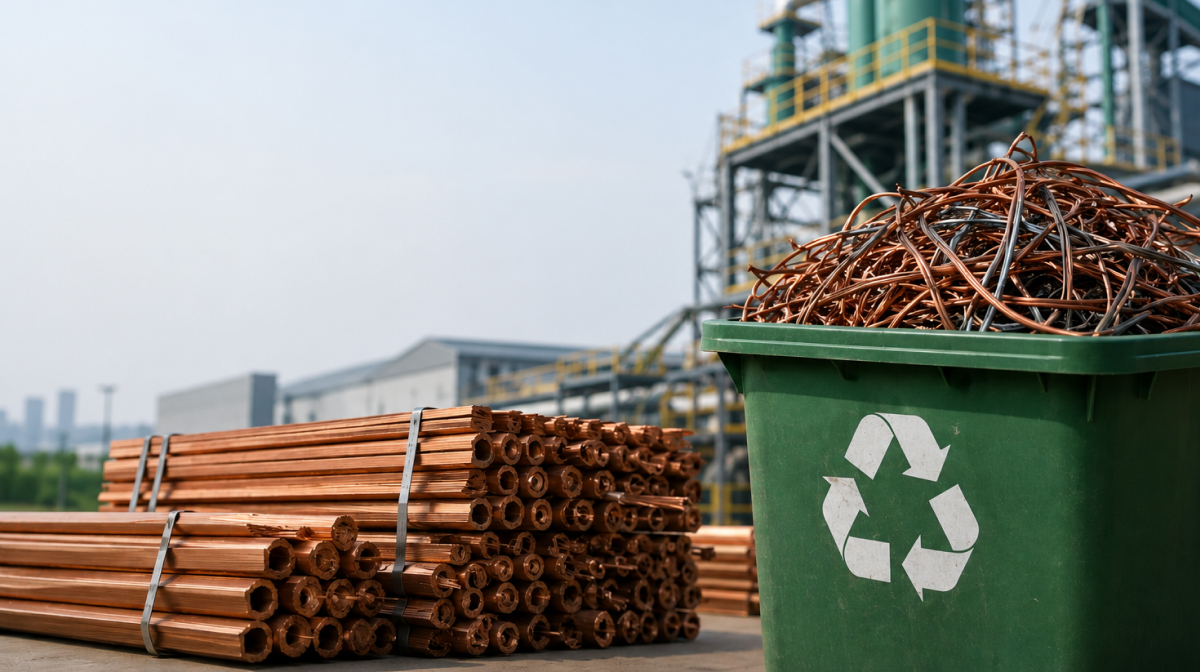
Among all metals, copper is emerging as a critical material in India’s green transition. It is essential for electric vehicles, renewable energy systems, power transmission and electrification, and consumer electronics.
This has led to the emergence of initiatives such as the green copper plant, which represents a new approach to copper production.
Unlike conventional methods, a green copper plant integrates renewable energy, such as rooftop solar to power operations. Since converting copper anodes into cathodes primarily requires electricity, the use of solar energy significantly reduces dependence on fossil fuels.
This enables the production of green copper cathode, which:
- has a lower carbon footprint
- meets the sustainability requirements of global industries
- aligns with the growing demand for environmentally responsible materials
For industries that prioritise green sourcing, this shift makes India an increasingly attractive supplier of sustainable copper.
The Expanding Scope of Metal Recycling
The growth of metal recycling in India is not limited to traditional scrap sources. New streams are emerging, particularly from e-waste generated by smartphones, laptops, and appliances, industrial and manufacturing by-products, and end-of-life infrastructure and equipment.
With increasing formalisation of e-waste processing and stronger regulatory frameworks, metal recycling companies in India are expanding into new domains, thereby unlocking value from materials that were previously underutilised.
This diversification is strengthening the overall recycling ecosystem and creating new opportunities for organised recycling companies in India.
From Linear to Circular: A Structural Shift
India is gradually moving away from a linear “produce–use–dispose” model towards a circular system where materials are continuously reused.
In this model:
- Scrap becomes a valuable raw material
- Recycling plants act as production hubs
- Manufacturers integrate recycled metals into their supply chains
This transition is not just environmental, but also economical. It reduces dependence on imports, improves cost efficiency, and enhances long-term resource security.
At Jain Resource Recycling, the shift towards green metal production is seen as a natural evolution of the industry. The focus is on strengthening systems that connect scrap generation with high-quality output, ensuring that recycled metals meet the performance expectations of modern industries.
Under the leadership of Chairman and Managing Director Kamlesh Jain, the approach continues to evolve in line with emerging opportunities such as green copper plant initiatives and expanding recycling domains. By aligning operations with sustainability goals and industry demand, the emphasis remains on building a more efficient and responsible metal ecosystem.
The shift towards green metal production in India is well underway. With advancements in recycling plants, growing capabilities of metal recycling companies in India, and the emergence of innovations like the green copper plant, the industry is moving towards a cleaner and more sustainable future. As demand for environmentally responsible materials continues to rise, metal recycling will play a defining role in shaping India’s industrial landscape, transforming waste into a resource and enabling long-term, sustainable growth.