Manufacturing has always depended on metals. From automobiles and electrical equipment
to construction, infrastructure and consumer products, metals are fundamental to modern
industry. But as demand grows, manufacturers are looking beyond mines and primary
production for another valuable source: secondary metals.
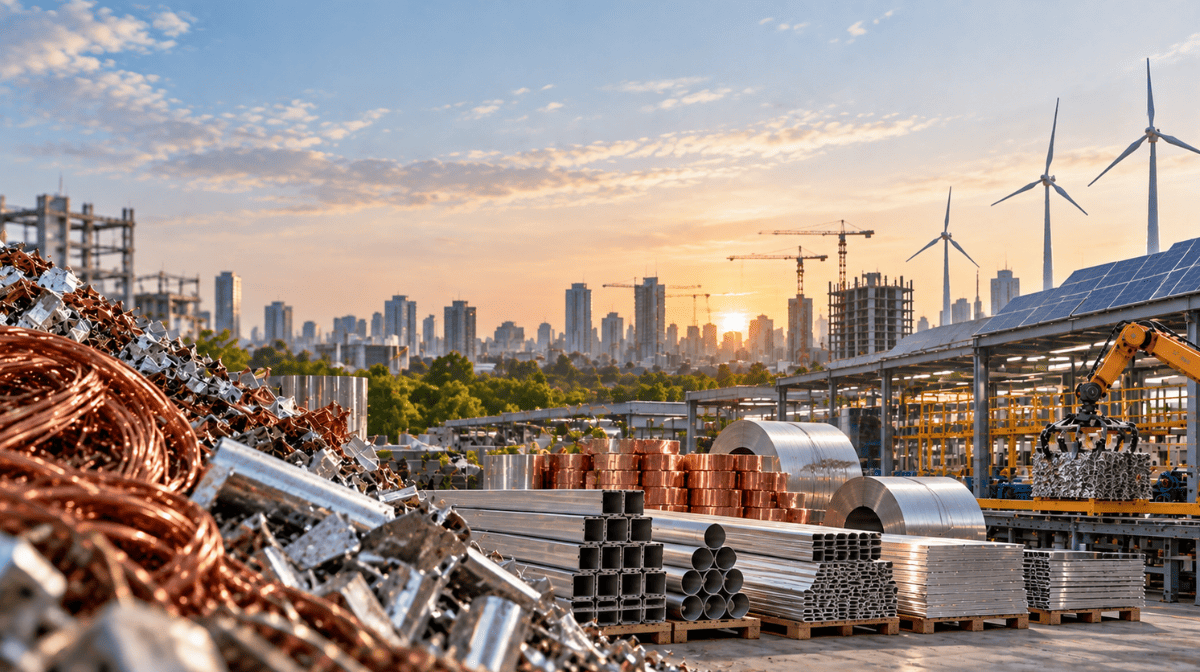
Secondary metals are metals recovered from scrap and processed for reuse in
manufacturing. What was once treated largely as waste is increasingly being recognised as
a strategic industrial resource. Through efficient metal scrap recycling, materials such as
aluminium, copper and steel can be recovered, processed and returned to manufacturing
cycles.
Scrap is more than waste
The value of metal scrap lies in the material it contains.
Metals can often be recovered and processed without losing their fun
damental properties.
Copper, for example, can be recycled repeatedly and, when appropriately refined to meet
the required purity and specifications, recycled copper can retain the performance properties
required for industrial applications. The International Copper Association estimates that more
than 30% of copper used over the last decade has come from recycled sources.
This makes recycled metals an important source of raw material for industries that need
reliable supplies while also looking to reduce their dependence on virgin resources.
In India, this is becoming increasingly relevant. The Ministry of Mines’ National Non-Ferrous
Metal Scrap Recycling Framework identifies organised collection, segregation, sorting and
recycling as important parts of building an effective recycling ecosystem for non-ferrous
metals.
Why secondary metals matter to manufacturing
The importance of secondary raw materials is not simply environmental. It is also about
resource efficiency and supply.
Producing metal from ore involves extraction, processing and refining before the material
reaches a manufacturer. Recycling starts with material that already exists within the
economy. This can reduce the need for some of the energy and resources associated with
primary production.
Aluminium provides a clear example. According to the International Aluminium Institute,
producing aluminium from recycled material requires around 95% less energy than primary
aluminium production.
India’s own resource-efficiency discussions point in the same direction. NITI Aayog has
noted that secondary aluminium production from scrap is substantially less carbon-intensive
than primary aluminium production.
For manufacturers, therefore, metal recycling is increasingly connected to efficiency,
resource security and sustainability – not simply waste management.
The role of non-ferrous metals
The conversation becomes particularly important when it comes to non-ferrous metals such
as aluminium, copper and lead.
These metals are used across sectors including electrical and electronics, automotive,
construction, infrastructure and industrial manufacturing. Their ability to be recovered from
products and industrial scrap gives them a continuing role in the material cycle.
Copper is a strong example. It can be recycled repeatedly and, when appropriately refined
and processed to meet required purity and specifications, recycled copper can be used for
applications requiring the same performance properties as primary copper. The International
Copper Association also reports that copper recycling requires significantly less energy than
primary production.
This does not mean recycled material can completely replace primary production. Growing
demand, long product lifetimes and difficulties in recovering complex materials mean that
both primary and secondary sources remain necessary.
The opportunity is to make the secondary stream stronger, more organised and more
efficient.
Scrap collection and segregation
The recycling process begins with collection.
Metal scrap can come from manufacturing processes, fabrication, discarded products and
other end-of-life material streams. Once collected, the scrap needs to be segregated so that
different metals and material types can be channelled into appropriate recycling processes.
The Ministry of Mines’ National Non-Ferrous Metal Scrap Recycling Framework identifies
systematic, organised collection, segregation and sorting as central to an effective material
recycling ecosystem.
The exact collection and segregation route varies depending on the type of scrap, the metals
present and the condition of the material.
Sorting and preparation
Once scrap has been collected and segregated, it needs to be prepared for recovery.
This can involve sorting material by metal type, composition, grade and other relevant
characteristics before it enters the appropriate processing route. The objective is to create a
more consistent feedstock for subsequent recovery and refining.
The method used can vary significantly depending on the scrap composition. High-grade
fabrication scrap, for example, may follow a different route from lower-grade or mixed scrap
containing other metals and impurities.
Metal recovery and refining
After sorting and preparation, the next stage is recovering the metal from the scrap.
Depending on the metal and scrap composition, this can involve processes such as melting,
smelting, refining and removal of impurities. Some high-grade scrap can be directly
remelted, while lower-grade or more complex scrap may require additional processing and
refining before the recovered metal can be used again.
For copper, for example, high-grade fabrication scrap can be directly remelted, while
lower-grade scrap may undergo smelting and refining to remove impurities and maintain the
required copper purity.
Quality testing
Recovering metal is only part of the process. The recovered material must also meet the
specifications required for its intended application.
Quality testing and process controls help determine factors such as composition, purity and
consistency. The testing requirements depend on the metal, the source and composition of
the scrap, and the intended end use.
This is particularly important because different manufacturing applications require different
grades and specifications of secondary metal.
From scrap to manufacturing
The route from scrap to a usable secondary metal therefore depends on the material
involved:
| Scrap Type | Recovered material | Potential manufacturing uses |
| Copper wires, cables and fabrication scrap | Recovered copper | Electrical products, wires, cables and other copper applications |
| Copper-containing end-of-life products | Recovered copper and other metals | Electrical, electronics and industrial applications |
| Aluminium fabrication scrap and offcuts | Recovered aluminium | Automotive, construction, packaging and manufacturing applications |
| End-of-life aluminium products | Recovered aluminium | New aluminium products and industrial applications |
| Mixed or complex non-ferrous scrap | Recovered metals after appropriate sorting and processing | Applications depending on recovered metal quality, composition and specifications |
The exact recovery route and end use depend on the composition, purity and condition of
the scrap and the specifications required by the final application.
India is building a stronger recycling ecosystem
India’s policy direction increasingly recognises the role of recycling in industrial growth.
This reflects a larger shift: recycling is moving from the end of the waste-management
conversation towards the beginning of the manufacturing and resource-security
conversation.
From scrap to strategic resource
The future of metal scrap recycling will depend on what happens between collection and
final reuse.
Better segregation, sorting, processing and quality control can help ensure that valuable
materials return to industry in a form manufacturers can use. This is particularly important for
complex scrap streams, where recovering valuable metals can be technically challenging.
For businesses such as Jain Resource Recycling Limited, the opportunity lies not just in
processing scrap, but in creating a dependable bridge between discarded materials and
industrial raw materials.
That is where the real value of secondary metals lies. They are not simply materials that
have reached the end of their first life – they are resources that can begin another one.
As India expands its manufacturing capabilities and moves towards a more
resource-efficient circular economy, the importance of reliable recycled metals will only
become more significant. The future of manufacturing will not be built only on what we
extract from the earth, but also on how effectively we recover, refine and reuse what is
already in circulation.
Sources
International Aluminium Institute – Aluminium Recycling & Energy Savings
(https://international-aluminium.org/landing/aluminium-recycling-saves-95-of-the-energy-needed-for-primary-aluminium-production/)
NITI Aayog – Aluminium resource efficiency
(https://www.niti.gov.in/node/2104)
Ministry of Mines, Government of India – National Non-Ferrous Metal Scrap Recycling
Framework, 2020
Metal Scrap Recycling Framework
(https://mines.gov.in/admin/storage/app/uploads/65d843ec4cbf11708671980.pdf)
International Copper Association – Copper Recycling
(https://internationalcopper.org/resource/copper-recycling/)
Ministry of Mines, Government of India – Critical Mineral Value Chain, 2026
(https://www.pib.gov.in/newsite/erelcontent.aspx?lang=2®=48&relid=288345&utm_)