What determines how much value can be recovered from a pile of scrap?
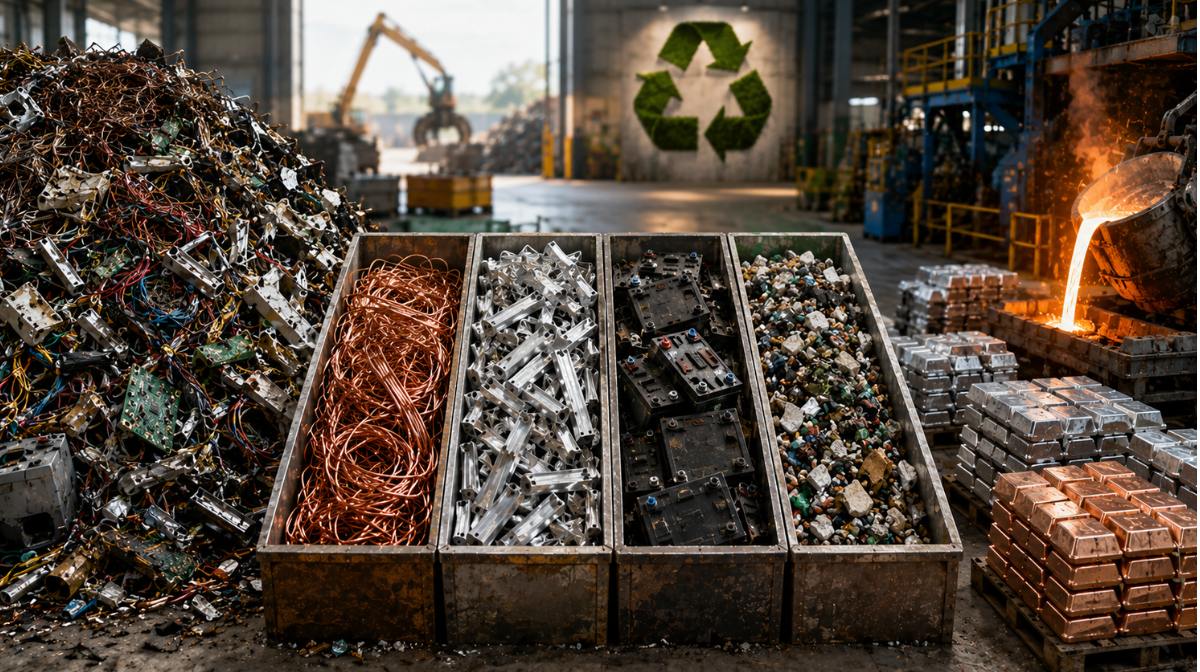
The answer begins much earlier than the furnace. Before metals can be melted, refined, or converted into new industrial products, the scrap needs to be identified, separated, and prepared for the right processing route.Copper, aluminium, lead, and other metals can enter recycling facilities in very different forms and grades. When these materials are properly segregated, recyclers can direct them towards processes suited to their composition and characteristics. This makes scrap segregation an important foundation for efficient metal recovery, better material utilisation, and more consistent recycled output.
1. Maximising the Purity and Value of Recovered Metals
Not all scrap contains the same metal, grade, or composition. A mixed scrap stream can contain different metals, alloys, plastics, rubber, and other contaminants, making proper separation vital before further processing.
For example, copper-bearing scrap may contain insulation or other non-metallic materials, while lead-acid battery scrap contains lead-bearing components as well as plastics. Segregating these materials helps create more suitable feedstock for subsequent recycling processes.
The advantages of source-level segregation include:
- Better material identification and grading
- Reduced mixing of chemically incompatible materials
- More suitable feedstock for precise processing
- Improved utilisation of recoverable metals
- Greater consistency in the final recycled material
The objective is not simply to sort waste. It is to ensure that the valuable material within the waste reaches the right recovery process without degrading its core properties.
2. Better Segregation Supports Better Metal Recovery
Different metals and scrap grades require entirely different processing routes. When scrap is correctly identified and prepared, it can be directed towards the appropriate melting, refining, or recovery process, helping recyclers optimise processing conditions for the specific material being handled.
Consider some of the major non-ferrous recycling streams:
- Copper scrap can include wires, cables, electronic scrap, motor scrap, and other copper-bearing materials.
- Aluminium scrap can include aluminium tread, talon, tense, extrusion scrap, and aluminium chip scrap.
- Lead scrap can include lead scrap from used lead-acid batteries and other lead-bearing materials.
The more effectively these streams are separated, the easier it becomes to process each material according to its unique characteristics. This creates a simple relationship:
Better segregation → Better feedstock → More efficient processing → Better material recovery
3. Reducing Unnecessary Processing and Material Loss
Segregation can also help improve the efficiency of downstream recycling operations. When the composition of the feedstock is thoroughly understood, recyclers can select the appropriate processing route instead of treating a mixed stream as a single, uniform material.
This helps reduce unnecessary secondary processing and improves the utilisation of energy, equipment, and other resources involved in recovery. For metal recyclers, this is particularly important when dealing with high-volume industrial scrap.
Efficient preparation allows material to move more systematically through subsequent stages such as melting, refining, and casting. The result is a more controlled recycling process where the focus remains on recovering maximum value from the available scrap with minimal material loss.
4. Different Scrap Streams Need Different Recycling Routes
One of the clearest examples of the importance of segregation can be seen across different metals and their unique processing requirements.
Copper
Copper scrap can come from end-of-life wires and cables, electronic waste, insulated copper cable scrap, motor scrap, graphite-coated copper foil, and other copper-bearing materials.
At Jain Resource Recycling, copper scrap undergoes strict sorting and pre-processing before it enters the melting stage. The process includes activities such as sorting, stripping, and shredding to separate copper from non-copper materials. The recovered copper is subsequently melted and cast into products such as copper ingots and billets, according to specific customer requirements.
Aluminium
Aluminium scrap also comes in several distinct forms and grades.
Our aluminium recycling operations handle a diverse range of materials, including aluminium tread, aluminium talon, aluminium tense, extrusion scrap, and aluminium chip scrap. Separating these different scrap streams allows the material to be prepared appropriately before it moves into aluminium recycling and alloy production.
Lead
Lead recycling provides another clear example of why segregation matters. Lead-bearing scrap primarily includes used lead-acid batteries, which contain recoverable lead as well as plastic components.
At our recycling facilities we are equipped with lead-acid battery scrap breaking machines that support the clean separation of lead-bearing material from plastic components before further downstream processing.
Each of these examples demonstrates the same core operational principle: different scrap streams require different recovery routes.
5. Segregation Supports Integrated Recycling Operations
For a recycling company working across multiple non-ferrous metals, segregation becomes an important part of managing different material streams efficiently.
Our recycling operations span three facilities located at the SIPCOT Industrial Estate in Gummidipoondi, Chennai, with dedicated capabilities across lead, copper, and aluminium scrap.
- Facility 1: Dedicated to lead scrap recycling, including lead scrap from lead-acid batteries.
- Facility 2: Dedicated to copper scrap recycling, including multiple copper-bearing scrap categories.
- Facility 3: Dedicated to aluminium scrap recycling, including different aluminium scrap streams.
The facilities are equipped with specialised recycling and processing equipment, including refining furnaces, rotary furnaces, induction furnaces, melting furnaces, burners, and casting equipment. The lead recycling operations also include high-capacity, automatic lead-acid battery scrap breaking capabilities.This infrastructure allows different scrap streams to be processed through appropriate, independent recycling routes rather than treating all scrap as a single category.
From Segregated Scrap to Industrial Material
The ultimate purpose of scrap segregation is not simply to organise waste. It is to create an efficient pathway from discarded material to usable secondary raw material.
The broader recycling journey follows a structured loop:
Scrap collection → Segregation → Pre-processing → Metal recovery → Refining/processing → Casting → Industrial applications
Once recovered and processed, metals can safely return to the industries that rely on them. Recycled copper supports electrical, automotive, and electronics applications.
Recycled aluminium is converted into alloys for automotive, construction, packaging, and other industrial uses. Recovered lead is refined into products used across battery manufacturing and other lead-based applications.
This is where metal recycling transitions from waste management to a core pillar of a larger circular manufacturing system.
Why Better Segregation Matters for India’s Recycling Ecosystem
India’s rapid industrial growth is exponentially increasing the demand for metals across the automotive, electrical, electronics, infrastructure, renewable energy, and manufacturing sectors. At the same time, large quantities of these materials already exist within products, components, and industrial scrap that have reached the end of their first life cycle.
Recovering these materials efficiently through structured segregation reduces reliance on primary mining, curbs energy consumption, and secures domestic supply chains for critical metals. By treating scrap as a valuable resource that requires precise engineering, specialized infrastructure, and meticulous sorting, the recycling industry can deliver the high-grade raw materials necessary to sustain India’s manufacturing future.
At Jain Resource Recycling, we see effective segregation as the first step towards unlocking greater value from scrap and building a more efficient, circular metal recycling ecosystem.
Frequently Asked Questions (FAQs)
Q1: What exactly is scrap segregation in metal recycling?
A: Scrap segregation is the process of identifying, sorting, and separating different types of metal waste based on their specific metal categories (like copper, lead, or aluminium), alloy compositions, and physical forms before they enter the melting or refining furnaces.
Q2: Why can’t mixed metals be melted together and separated later during refining?
A: Metals have widely differing melting points and chemical properties. Melting a mixed stream causes metals with lower melting points to oxidize and burn away, lowering the overall metal recovery rate. Furthermore, cross-contamination alters the alloy’s chemical matrix, creating brittle, low-value material that fails to meet industrial manufacturing standards.
Q3: How does Jain Resource Recycling handle different metal scrap streams?
A: Jain Resource Recycling manages segregation by operating three distinct facilities at the SIPCOT Industrial Estate in Gummidipoondi, Chennai. Each facility acts as a specialized unit focusing entirely on its respective category: Facility 1 for lead, Facility 2 for copper, and Facility 3 for aluminium.
Q4: What types of complex industrial scrap require specialized pre-processing?
A: Complex components like insulated copper cable scrap, motor scrap, graphite-coated copper foil, and lead-acid battery scrap cannot be thrown directly into standard furnaces. They require specialized mechanical pre-processing such as shredding, stripping, and automated breaking to cleanly isolate the valuable metallic content from plastics, rubbers, and coatings.