Where does aluminium go when a vehicle component is replaced, a manufacturing off cut is generated, or an aluminium product reaches the end of its useful life?
It does not necessarily have to become waste.
Aluminium can be recovered, processed, and converted into a valuable secondary raw material for industrial use. This makes aluminium scrap an important part of India’s recycling ecosystem, particularly as aluminium continues to find applications across automotive, construction, packaging, and engineering.
For manufacturers, the growing availability of recycled aluminium also creates an opportunity to make greater use of materials already in circulation while supporting more resource-efficient production.
Why Aluminium Scrap Matters to Indian Industry
Aluminium is widely used because of its combination of light weight, strength, durability, and versatility. Its applications extend across several major industries:
- Automotive: Components, wheels, engine parts, and other lightweight applications
- Construction: Windows, doors, structural applications, and extrusions
- Packaging: Cans, foils, and other packaging products
- Electrical and engineering: Wires, components, and industrial applications
This wide industrial use creates a continuous stream of aluminium scrap.
Some of this material comes directly from manufacturing, including off-cuts and surplus material. Other scrap is generated when aluminium-containing products reach the end of their useful life.
The availability of these different scrap streams creates an opportunity to recover aluminium and return it to industrial use.
From Scrap to a Reusable Material
Not all aluminium scrap is the same. Its form, composition, and level of contamination can vary depending on where it comes from.
This makes scrap segregation and processing an important part of the recycling process.The material journey can broadly be understood as:
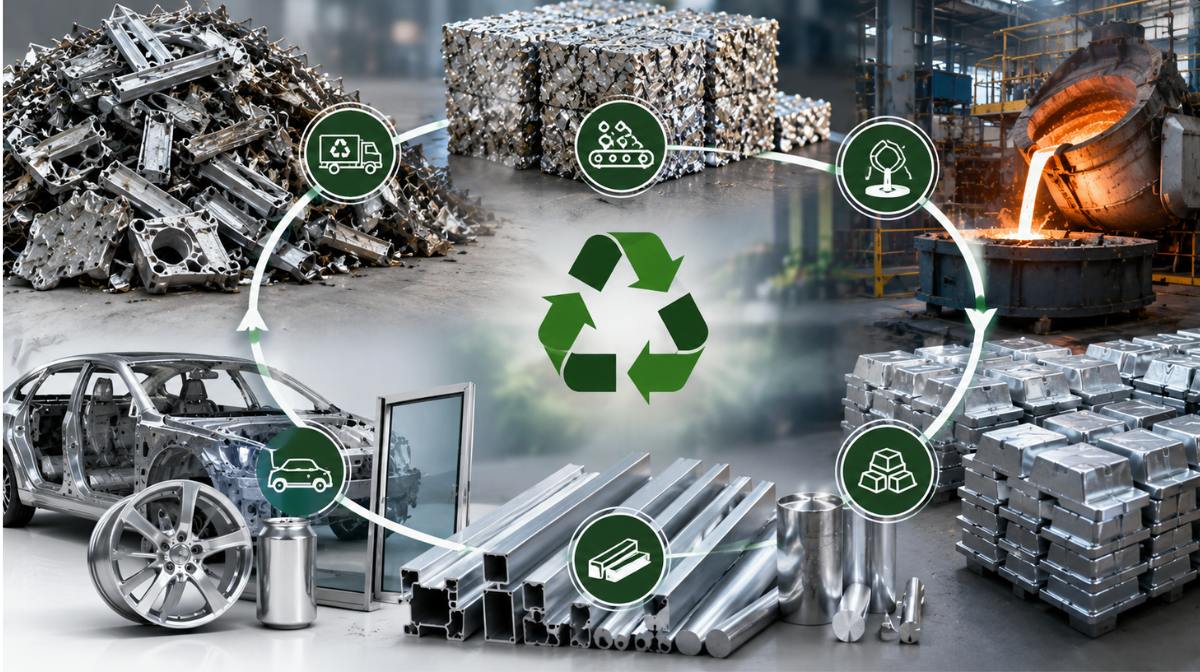
Collection → Sorting and segregation → Processing → Melting → Alloy production → Industrial applications
The objective is to recover the aluminium efficiently while maintaining the material characteristics required for its next application.For manufacturers, this transformation is important because recycled aluminium is not simply scrap that is melted again. Through controlled processing and alloy production, it can become a material suitable for specific industrial requirements.
The Growing Role of Recycled Aluminium
The use of secondary aluminium is particularly relevant in industries that require large volumes of the metal.
In India, secondary aluminium is used across sectors such as automotive, construction, packaging, and engineering. Automotive applications include components such as engine blocks and transmission systems, where aluminium’s lightweight and performance characteristics make it an important material.
This creates a strong connection between aluminium scrap and manufacturing.
The journey can be viewed simply:
Industrial and end-of-life scrap → Recycled aluminium → Aluminium alloys and products → Manufacturing
This circular flow allows aluminium already exists in the economy to be recovered and used again.
How Aluminium Scrap Becomes Industrial Raw Material
The recycling process is designed to recover aluminium while preparing it for its next industrial application.
1. Collection and segregation
Aluminium scrap is collected and classified based on its type, composition, and source. This can include manufacturing scrap as well as aluminium recovered from products that have reached the end of their useful life.
2. Processing and preparation
The scrap is prepared for melting by removing unwanted materials and segregating different grades where required.
3. Melting and alloying
The prepared aluminium scrap is melted in furnaces. Depending on the required product, alloying elements can be introduced to achieve the desired composition.
4. Casting into usable products
The processed aluminium is cast into ingots or other forms that can be supplied for industrial applications.
The focus throughout the process is on recovering value from the scrap and converting it into material that can return to manufacturing.
Why Alloy Consistency Matters
Recycling aluminium is not only about recovering the metal. The composition of the final material also matters.
Different manufacturing applications require different aluminium alloys. Automotive components, for example, can have specific requirements related to strength, weight, durability, and casting performance.
This is why controlled processing and alloy production are important parts of the recycling value chain.
Consistent recycled aluminium can support applications such as:
- Automotive components
- Die-cast products
- Construction materials
- Engineering applications
- Packaging and other industrial products
The ability to process different aluminium scrap streams into suitable alloys is therefore an important part of creating value from secondary aluminium.
An Integrated Recycling Ecosystem
At Jain Resource Recycling, aluminium recycling forms part of a wider non-ferrous metal recycling ecosystem.
We operate our recycling facilities at the SIPCOT Industrial Estate in Gummidipoondi, Chennai, covering multiple material streams. These include Aluminium scrap recycling at our Facility 3 unit in Gummidipoondi (Chennai)
Our recycling facilities process different forms of aluminium scrap, including aluminium tread, aluminium talon, and aluminium tense. This integrated approach brings different scrap streams into an organised recycling infrastructure and supports their conversion into usable secondary materials.
By bringing together scrap collection, processing, recycling, and refining capabilities across multiple facilities and material streams, continuing to strengthen its approach to resource recovery.
Supporting a More Circular Aluminium Supply Chain
The value of aluminium recycling extends beyond managing scrap. It creates an opportunity to keep a widely used industrial material within the manufacturing cycle.
As India’s automotive, construction, packaging, and engineering sectors continue to expand, the demand for aluminium will remain closely connected to the availability of reliable raw materials.
For aluminium scrap buyers, recyclers, and manufacturers, this creates an increasingly connected ecosystem where collection, processing, alloy production, and industrial consumption work together.
At Jain Resource Recycling, our focus on organised recycling enables aluminium scrap and other secondary materials to be recovered and processed for productive use.
By strengthening the link between scrap and manufacturing, aluminium recycling can support India’s transition towards a more circular and resource-efficient industrial economy.
Frequently Asked Questions (FAQs)
What is aluminium scrap?
Aluminium scrap refers to discarded, surplus, or recovered aluminium materials generated during manufacturing processes or from products that have reached the end of their useful life. It can include sheets, extrusions, components, and other aluminium-containing materials.
How is aluminium scrap recycled?
Aluminium scrap is generally collected, sorted, processed, melted, and converted into aluminium alloys or other usable forms. The exact process depends on the type and composition of the scrap.
What industries use recycled aluminium?
Recycled aluminium is used across several industries, including automotive, construction, packaging, engineering, and manufacturing. Automotive applications are an important market for secondary aluminium.
What does an aluminium recycling company do?
An aluminium recycling company collects and processes aluminium scrap and converts it into recycled aluminium products or alloys suitable for industrial applications. The process can include segregation, melting, alloying, and casting.
Why is alloy consistency important in recycled aluminium?
Different applications require aluminium with specific material characteristics. Controlled processing and alloy production help ensure that recycled aluminium is suitable for its intended industrial application.
Why is aluminium recycling important for India?
Aluminium recycling helps recover a valuable industrial material from existing scrap streams and return it to manufacturing. This supports resource efficiency and creates a more circular flow of materials across India’s industrial ecosystem.