India is entering an important phase of manufacturing growth. From electric vehicles and electronics to infrastructure, renewable energy, construction, and engineering, industries across the country are expanding and creating demand for a wide range of metals.
Copper, aluminium, lead, and tin are already essential to many of these industries. As manufacturing grows, however, the requirement is not simply for more metal. There is also a growing need to use existing metal resources more efficiently.
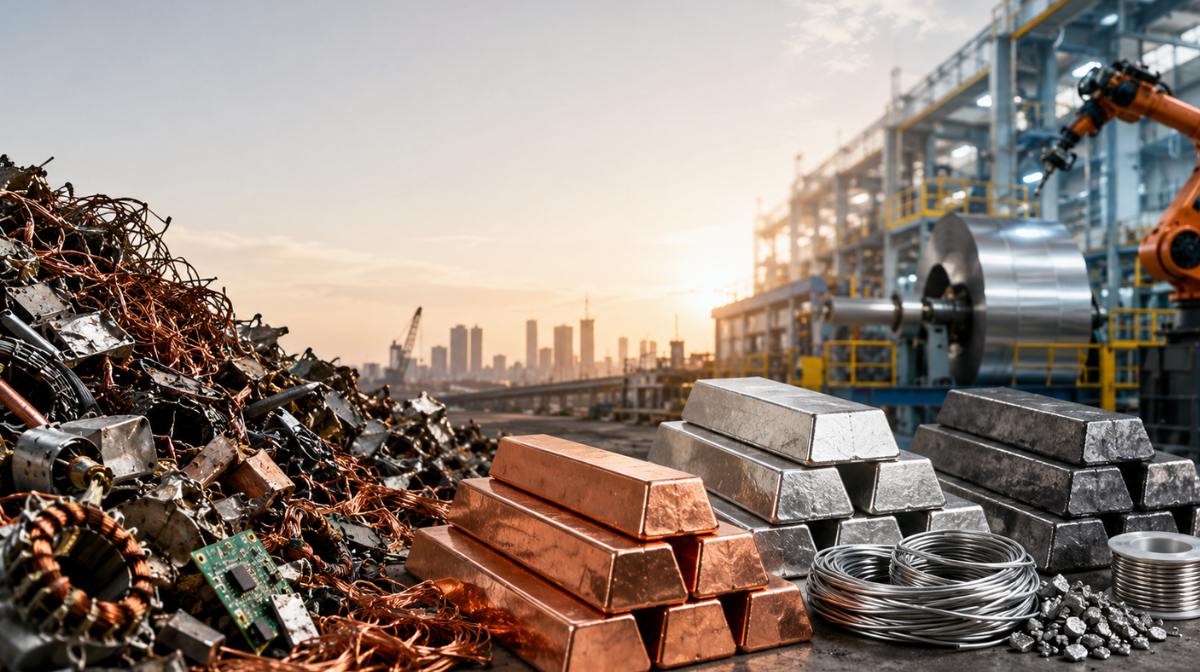
This is where secondary metals are becoming increasingly important. Recovered from industrial scrap, end-of-life products, electronic waste, used batteries, and other sources, these metals can be processed and returned to manufacturing as valuable industrial raw materials.
India’s Manufacturing Growth Is Increasing Metal Demand
India’s manufacturing expansion is being driven by several sectors that are highly dependent on metals.
The growing adoption of electric mobility, expansion of electronics manufacturing, infrastructure development, renewable energy projects, construction, and industrial production are all creating demand for materials such as copper, aluminium, lead, and tin.
Each metal has a distinct role within the manufacturing ecosystem:
- Copper is widely used in electrical equipment, wires and cables, electronics, automotive systems, infrastructure, and renewable energy.
- Aluminium is important for automotive, construction, packaging, engineering, and lightweight manufacturing applications.
- Lead remains closely linked to lead-acid batteries used in automotive, telecom, UPS, inverter, solar, and industrial applications.
- Tin is widely used in soldering, electronics, plating, and industrial alloys.
As these industries expand, ensuring a reliable supply of these metals becomes increasingly important.
The Resource Already Exists in India’s Scrap
While primary metal production will continue to remain an important part of the supply chain, a significant amount of metal is already present within products and materials that have completed their first useful life.
Industrial manufacturing generates process scrap and off cuts. Vehicles, electrical equipment, electronic products, batteries, and other products eventually generate end-of-life materials. These streams contain valuable metals that can be recovered and returned to productive use.
This creates an important opportunity for the recycling industry.
Today’s scrap can become tomorrow’s industrial raw material.
Instead of viewing scrap only as waste, organised recycling can transform it into a source of secondary materials for India’s expanding manufacturing ecosystem.
What Makes a Metal “Secondary”?
The basic distinction between primary and secondary metals is straightforward.
Primary metals are produced from newly extracted mineral resources, while secondary metals are recovered from scrap and materials that have already entered the industrial economy.
The secondary metal cycle can broadly be understood as:
Product → End-of-life → Scrap → Collection → Segregation → Recovery and refining → Secondary metal → New manufacturing application
The importance of this cycle lies in keeping valuable materials in productive use.
A copper cable that has reached the end of its useful life can become a source of recycled copper. Aluminium recovered from manufacturing or end-of-life scrap can be processed into recycled aluminium and alloys. Lead from used lead-acid batteries can be recovered and refined for further industrial use.
The material may change form, but its value does not have to end with the original product.
Why Secondary Metals Are Becoming Important to Manufacturers
For manufacturers, secondary metals represent more than an alternative source of raw material. They connect the recovery of existing resources with the requirements of modern production.
Their growing importance can be understood through a few key factors:
- Better Resource Utilisation
Recycling allows metals that are already present within the economy to be recovered and used again. This helps extend the productive life of existing material resources.
- An Additional Source of Industrial Raw Materials
Secondary metal production creates another source of material alongside primary production. This becomes increasingly relevant as India’s manufacturing base continues to expand.
- Supporting Circular Manufacturing
Instead of following a one-way path from raw material to product to waste, recycled metals enable materials to move back into production after completing their first application.
- Recovery of Valuable Materials
Industrial scrap, electronic waste, used batteries, and end-of-life products can contain significant quantities of valuable metals. Organised recovery allows these materials to be brought back into the industrial cycle.
The role of secondary metals is therefore closely connected to the broader shift towards resource efficiency and circular manufacturing.
From Scrap to Manufacturing Input
Recovering metal from scrap is only the beginning. For secondary metals to become useful industrial inputs, the recovered material needs to be appropriately prepared and processed.
The journey can broadly include:
Scrap collection → Segregation → Pre-processing → Metal recovery → Refining and processing → Casting → Industrial applications
The exact process varies depending on the metal and the type of scrap being handled.
Segregation helps identify different materials and prepare them for the appropriate recycling route. Recovery and processing then extract the valuable metal, while refining and casting can convert it into forms suitable for subsequent industrial applications.
The value of recycling is therefore not simply in collecting more scrap. It lies in converting scrap into material that can re-enter the manufacturing cycle.
Why Quality Matters in Secondary Metal Production
As secondary metals become a more important part of manufacturing supply chains, the quality of recovered material becomes equally important.
Manufacturers require materials that are suitable for their specific applications. This makes the stages between scrap collection and final recycled material particularly important.
Efficient secondary metal production therefore depends on:
- Appropriate scrap segregation
- Suitable pre-processing
- Controlled metal recovery
- Refining where required
- Consistent material composition
- Appropriate product forms for industrial use
This is also why modern recycling is increasingly moving beyond simple scrap processing towards integrated recovery, refining, and secondary metal production.
The objective is to ensure that recovered metals can move back into industrial applications as useful and reliable materials.
Secondary Metals and India’s Manufacturing Future
India’s manufacturing growth will require a strong and reliable material ecosystem.
As electric mobility, electronics, infrastructure, renewable energy, construction, and engineering continue to expand, demand for industrial metals will remain strong. At the same time, products and industrial processes will continue to generate scrap containing valuable materials.
This creates an opportunity to connect the two.
Growing manufacturing demand
↓
Need for reliable metal supply
↓
Recovery of metals from existing scrap
↓
Processing into secondary metals
↓
Return to manufacturing
This circular flow allows valuable materials to remain in productive use and creates a stronger connection between recycling and manufacturing.
At Jain Resource Recycling, we see secondary metals as more than recovered materials. They are an opportunity to keep valuable resources in circulation and support the next phase of India’s industrial growth.
Frequently Asked Questions (FAQs)
What are secondary metals?
Secondary metals are metals recovered from scrap, end-of-life products, industrial waste, electronic waste, used batteries, and other sources and processed for further industrial use.
How is aluminium scrap recycled?
Aluminium scrap is generally collected, sorted, processed, melted, and converted into aluminium alloys or other usable forms. The exact process depends on the type and composition of the scrap.
How are secondary metals different from primary metals?
Primary metals are produced from newly extracted mineral resources, while secondary metals are recovered from materials that have already been used and returned to the recycling stream.
Which metals can be recovered as secondary metals?
A wide range of metals can be recovered through recycling, including copper, aluminium, lead, and tin, depending on the type and composition of the scrap being processed.
Why are secondary metals important for India’s manufacturing growth?
Secondary metals provide an additional source of industrial raw materials by recovering metals already present within the economy. They support better resource utilisation and create a more circular connection between end-of-life materials and manufacturing.
Where are secondary metals used?
Depending on the metal and its properties, secondary metals can support applications across automotive, electrical and electronics, infrastructure, construction, renewable energy, engineering, battery, and industrial manufacturing sectors.
What is the role of recycling companies in secondary metal production?
Recycling companies collect, segregate, process, recover, and refine scrap to convert it into secondary metals and other usable materials that can return to industrial supply chains.
How does secondary metal production support a circular economy?
Secondary metal production keeps valuable materials in circulation by recovering metals from products and scrap and returning them to manufacturing instead of allowing their material value to end with the original application.